
Last Saturday, 35 participants, including three guests from outside ZimWorX, gathered at Bunny Estates for a hands-on rabbit farming training session that demonstrated how practical skills can create lasting opportunities. The session combined technical instruction with a closer look at one of The51’s flagship sustainability initiatives.

The latest training builds on the success of our April programme, where 106 first-year students from Gwebi Agricultural College participated in an immersive rabbit farming course, followed by a dedicated programme for 22 ZimWorX team members. More than teaching farming techniques, the initiative complements classroom learning with practical experience. Participants gain hands-on knowledge in breed selection, housing, nutrition, breeding, disease management, record keeping, cost management, and identifying sustainable income opportunities.
Training Impact So Far
106 Gwebi Agricultural College students trained
22 ZimWorX team members trained
35 Participants trained in the latest session
163 people equipped with practical rabbit farming skills
Situated within the Gwebi Agricultural College ecosystem, Bunny Estates serves as a practical learning centre where participants experience modern rabbit production in a real farming environment. They learn how improved breeding and management practices contribute to healthier stock, increased productivity, and reduced kit mortality, while seeing how these principles can be applied on their own farms.
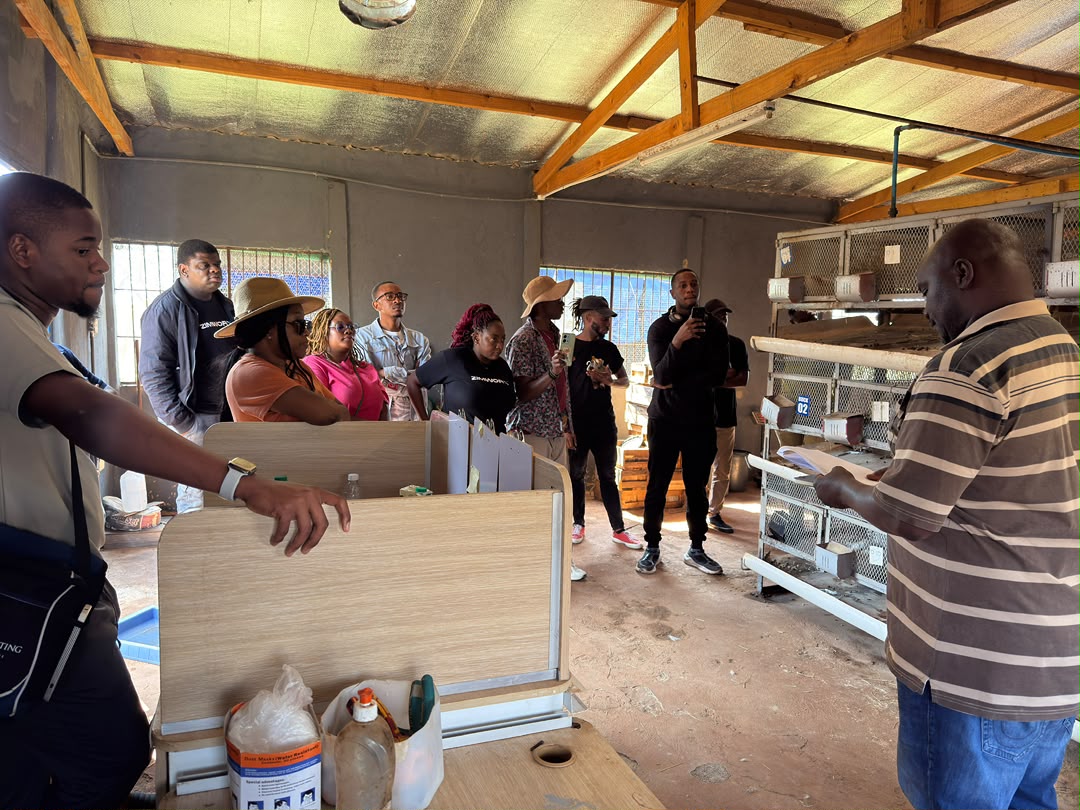
The training also highlights practical innovation. Operating entirely on solar power, Bunny Estates runs its borehole, electric fencing, offices, and lighting off-grid. Participants also discover how rabbit urine is being developed into an environmentally friendly insect repellent and foliar fertiliser, demonstrating how sustainable farming can maximise value while reducing waste.
More than a rabbit farm, Bunny Estates is a place where knowledge is shared, confidence is built, and opportunities begin. By equipping students, aspiring farmers, women, pensioners, and community members with practical agricultural skills, The51 is helping strengthen food security, create income-generating opportunities, and empower communities to build sustainable livelihoods.
