At Chabona Primary School in Chibombo District, Zambia, every young fruit tree has a pupil assigned to look after it. Each child waters, mulches and protects their own tree, learning as they go how an orchard grows. The school sits 82 kilometers outside Lusaka, and the trees are part of the Chabona Nutrition Garden and Orchard Project, a partnership between ZimWorX, through The51, and INUA Sustainable Impact (ISI). The latest updates from the field show real roots taking hold.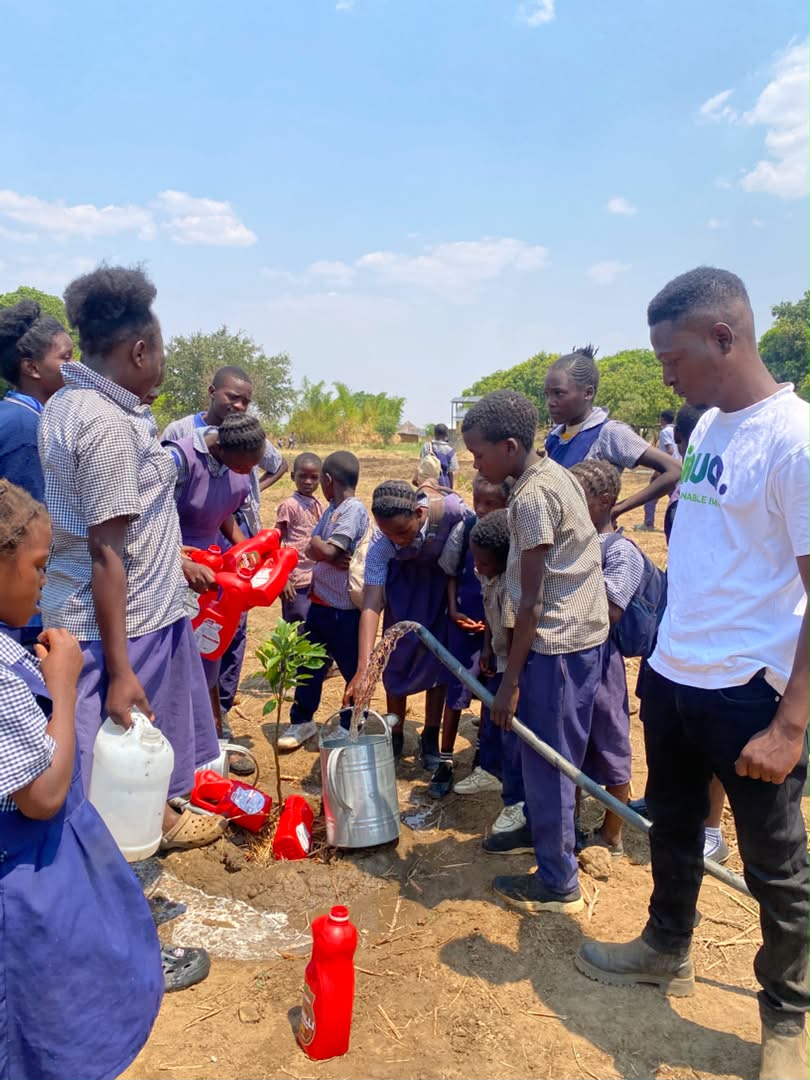
The idea is simple but powerful, to give Chabona Primary a fruit orchard and an irrigated vegetable garden that can diversify school meals, encourage attendance, and eventually generate its own income. Surplus produce will be sold locally to pay for seed, inputs and upkeep, so the garden becomes a self-sustaining source of food and funding for the school long after the initial investment is made.
Getting here took careful groundwork. INUA’s field team spent time on site with school administration and community representatives, walking the proposed garden boundary with the Deputy Head Teacher, discussing the plot layout with community members, and marking out and measuring the land with pupils and staff looking on. It is the kind of unglamorous, detailed work that makes sure a project is built to last, not just planted and left.
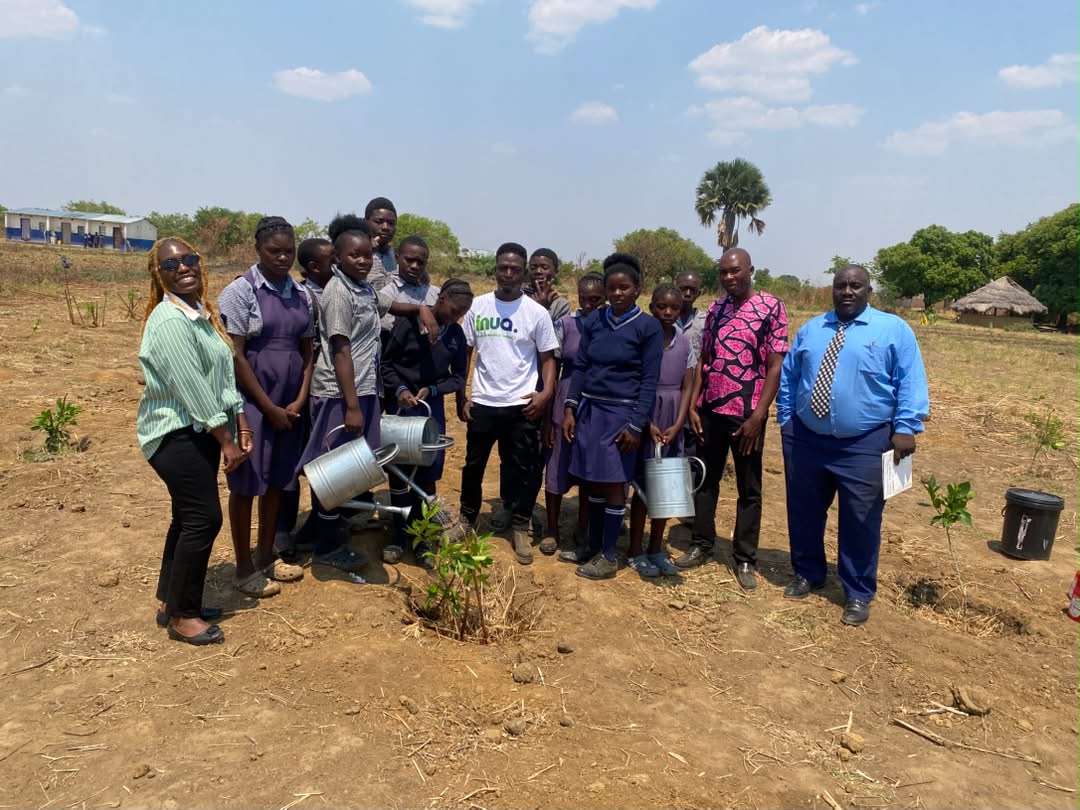
Then came planting day. Pupils and staff turned out to put orange, lemon, guava and nut trees into the ground. Each tree sits in its own watering basin, mulched with dry grass to hold moisture and ringed with cane stakes to protect it from trampling and animals. Meanwhile, vegetable seedlings had been germinating in nursery trays at INUA’s research farm, and by mid-October they were on track for the transplant window, being hardened off ahead of the move to Chabona. By the time of the 19 October update, the plot had been cleared, dug and shaped into long rows of beds, and the nursery-raised seedlings, including tomatoes, had been transplanted and were establishing.
Pupils are doing much of the work themselves though they have also been working on the vegetable beds alongside teachers and the INUA field team. An INUA agronomist has been attached to the project so the garden is a real classroom where pupils learn why trees are mulched, why basins hold water, and when and how much to water, rather than simply carrying water. The interest is spreading, too, with teachers asking for fruit trees to plant at their own homes, a sign that the project’s value is being recognized well beyond the school plot.
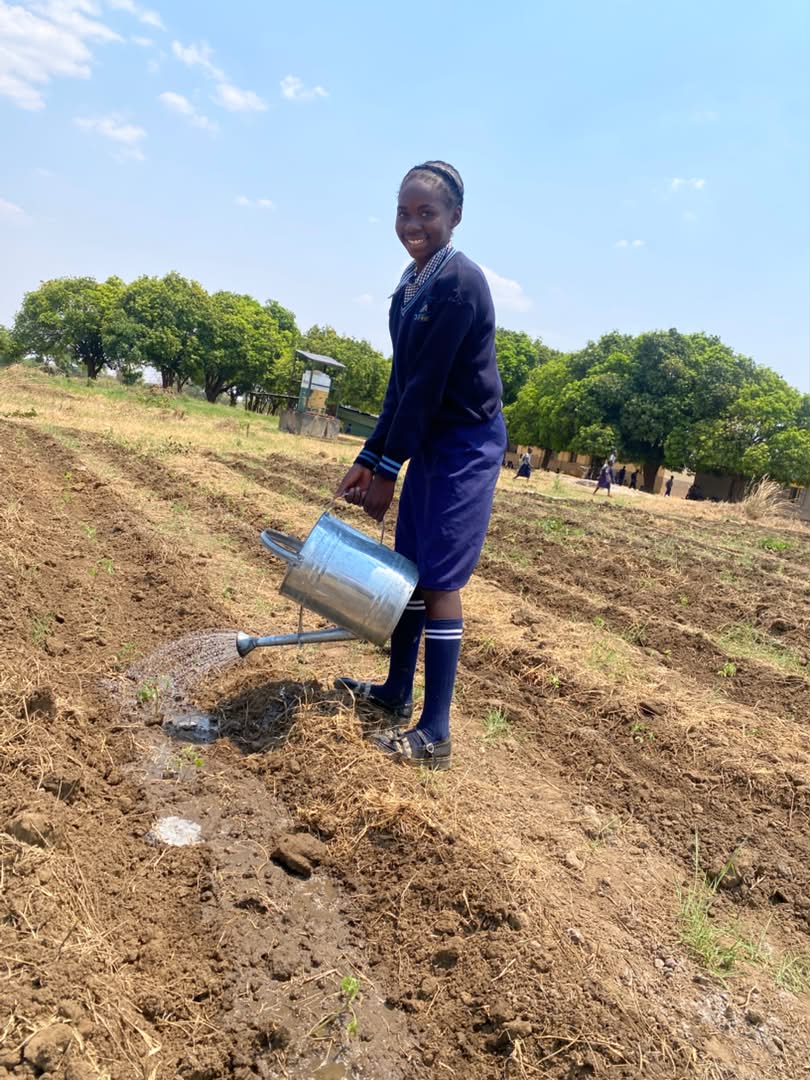
Water is one piece of the puzzle that is still outstanding. The existing solar pump and panels at Chabona are undersized for an orchard and vegetable garden of this scale, and upgrading the solar-powered pump and irrigation system is essential if the project is to scale up. For now, everything is watered by hand, with watering cans, recycled containers and a single hose from the existing pump. The timing makes it urgent as these are the hottest, driest weeks before the rains, when young trees and newly transplanted seedlings are at their most vulnerable. The priority is to complete the installation of the new pump and piping and connect the supply to the beds and orchard. Until it is running, pupils, teachers and the INUA team will keep up the mulching and hand-watering. A follow-up site visit was already being scheduled to keep momentum going and confirm next steps on the irrigation upgrade.
