The promise of artificial intelligence has been circling boardrooms, academic papers, and science fiction for longer than most of us care to admit. Back in 1993, the mathematician and computer scientist Vernor Vinge published his now-famous essay, “The Coming Technological Singularity: How to Survive in the Post-Human Era,” in which he predicted that humanity would create superhuman intelligence within 30 years, fundamentally ending the human era as we know it. (Source: historyofinformation.com) It was a bold prediction, and it captured imaginations worldwide.
Then, in November 2022, OpenAI launched ChatGPT and the prediction felt, for one breathless moment, as though it had finally arrived. Here, at last, was the technology that would do everything. Write your emails, build your strategy, answer your customers, and perhaps run your company whilst you slept.
The reality, as it so often is, turned out to be rather more nuanced.
Consider what happened when enterprise software companies spent the late 1990s and early 2000s selling ERP systems to businesses as the single solution that would transform operations overnight. The systems were genuinely powerful, but the companies that succeeded with them were the ones that invested heavily in trained people to implement, manage, and iterate on the technology. The tools without the talent were enormously expensive shelf-ware. A similar story played out with cloud computing in the 2010s. “Just move everything to the cloud,” the industry told businesses, promising a seamless, cost-free digital transformation. What followed for many organisations was a period of costly confusion, because the cloud required skilled engineers, project managers, and change specialists to actually deliver on its promise.
AI is no different. The technology is real, and its potential is significant. But the idea that it can wholesale replace the skilled, motivated, and capable people your business needs to grow, well, that is where things get complicated. And it is in that complication that a troubling new phenomenon has taken root.
What Is AI Washing, and Why Should You Care?
AI washing is, at its core, a form of deceptive marketing. The term was first formally defined by the AI Now Institute at New York University in 2019, and it refers to the practice of overstating or misrepresenting the role of artificial intelligence in a product, service, or business decision. (Source: Wikipedia) Think of it as the AI era’s equivalent of greenwashing, where companies slapped “eco-friendly” on products with little genuine environmental benefit to capture consumer goodwill. Companies engaged in AI washing use buzzwords like “AI-powered” or “AI-driven” without the substance to back them up.
But AI washing has evolved beyond misleading marketing copy. It now has a more consequential application: using AI as a convenient cover story for corporate decisions that would have happened regardless.
In the United States, the US Securities and Exchange Commission issued its first civil penalties in March 2024 against two investment advisory firms for making false and misleading statements about their use of AI, noting explicitly that “such AI washing hurts investors.” (Source: mccarthy.ca) Regulators are watching, and the consequences of AI washing are no longer theoretical.
The Layoff Cover Story
Here is where the AI washing conversation becomes genuinely important for businesses thinking about their people strategy.
The pandemic created an extraordinary period of over-hiring. Companies across every sector, from tech giants to financial services firms, expanded their workforces at a pace that was always going to be difficult to sustain. As economic conditions shifted, interest rates rose, and revenue growth slowed, those same companies faced the uncomfortable task of reducing headcount. The problem was how to do it without damaging their reputation, their employer brand, or their relationship with the public.
AI turned out to be the perfect narrative.
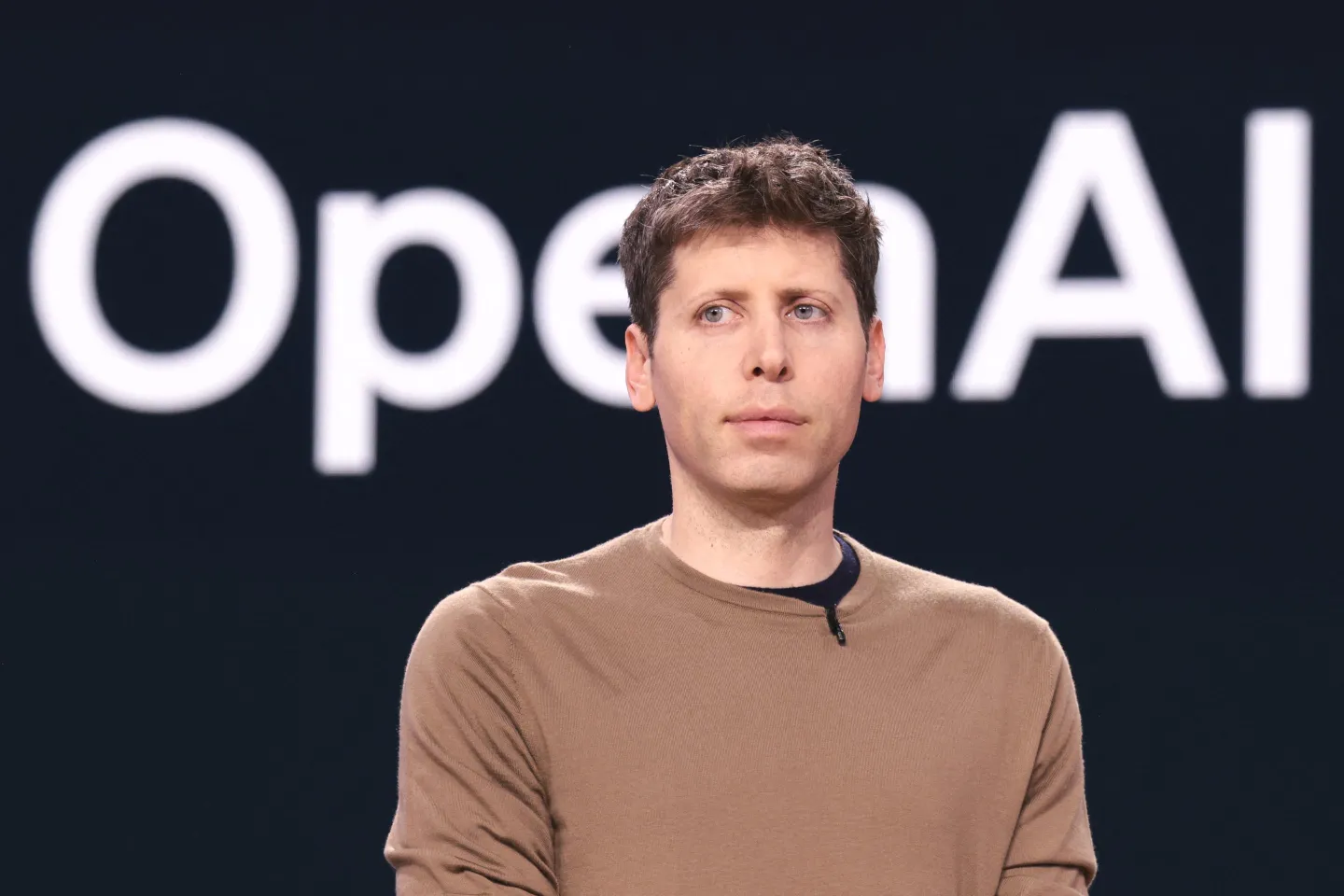
OpenAI CEO Sam Altman said what many in the industry were privately thinking when he told CNBC-TV18 at the India AI Impact Summit: “I don’t know what the exact percentage is, but there’s some AI washing where people are blaming AI for layoffs that they would otherwise do.” (Source: itpro.com) The man who arguably did more than anyone to accelerate the current AI moment was calling out corporate dishonesty directly.
The data supports his observation. According to figures from the consulting firm Challenger, Gray and Christmas, approximately 55,000 layoffs in 2025 were officially attributed to AI, which represents less than 1% of total job losses for the year. (Source: gizmodo.com) A working paper published by the National Bureau of Economic Research found that 90% of executives surveyed reported that AI had no impact on workplace employment over the past three years. (Source: nowadais.com) A Yale Budget Lab report using US Bureau of Labor Statistics data found no significant change in occupation changes or unemployment duration from ChatGPT’s release through to November 2025. (Source: yahoo.com)
The picture that emerges is of a corporate communication strategy, not a technological revolution. Companies are using the AI narrative to dress up decisions that were driven by pandemic over-hiring, market contraction, and plain old cost-cutting, and presenting them as forward-thinking innovation. That is AI washing in its most harmful form.
AI Is Not the Enemy
It is important to say clearly: AI is not the villain of this story. The technology is genuinely transformative when it is deployed thoughtfully, and the businesses that dismiss it entirely are making a different kind of mistake.
The research is compelling. A study published by Johns Hopkins and MIT Sloan found that human and AI teams showed roughly 73% higher productivity per worker on tasks like advertising copy compared to human-only teams. (Source: arxiv.org) Workers using generative AI tools report an average 40% productivity boost, with some controlled studies showing improvements of between 25% and 55% depending on the function. (Source: fullview.io) Research from the Federal Reserve Bank of St. Louis found that generative AI users saved an average of 5.4% of their working hours per week, with frequent users saving more than 9 hours weekly. (Source: stlouisfed.org)
But here is what the same research consistently shows: the gains belong almost entirely to human-AI combinations, not to AI acting alone. A 2025 paper from MIT Sloan’s School of Management made the case explicitly, distinguishing between automation (transferring tasks entirely to machines) and augmentation (AI enhancing human productivity), and finding that the vast majority of tasks benefit most from augmentation. (Source: mitsloan.mit.edu) Even in sectors with high AI exposure, the data shows a 10% boost in productivity alongside a 3.9% increase in job growth and a 4.8% rise in wages. (Source: unboxfuture.com) AI is lifting the productivity and the value of the skilled people who use it well.
As Sam Altman himself said: “We’ll find new kinds of jobs, as we do with every tech revolution.” (Source: fortune.com)
The organisations that will win in the next decade are not the ones replacing people with AI. They are the ones pairing excellent people with excellent AI tools to deliver results that neither could achieve independently.
Introducing the Tech-Enabled Team Member
At ZimWorX, we have been thinking about this deeply, and we want to introduce a term that we believe captures the future of remote work and AI outsourcing: the tech-enabled team member.
A tech-enabled team member is not simply a remote worker who happens to have a laptop. They are a skilled professional who actively integrates AI tools into their daily workflow to deliver faster, smarter, and higher-quality outcomes for the businesses they support. They bring human judgement, creativity, relationship-building capability, and domain expertise, and they layer AI tools on top of that foundation to multiply their output.
This is where AI outsourcing done properly looks entirely different from the AI washing you read about in the headlines. When a UK business partners with ZimWorX, they are not replacing a member of staff with a chatbot. They are adding a highly capable professional who uses AI the way a skilled tradesperson uses the best available tools, to do better work, more efficiently, for your business.
This matters enormously in the current environment. UK businesses face significant cost pressures, a tightening talent market, and growing demand for flexibility. The average cost of a full-time employee in the UK, including employer National Insurance contributions, pension obligations, and overhead, can easily reach £40,000 to £60,000 per year for a mid-level role, before you account for office space, equipment, and training. ZimWorX tech-enabled team members deliver equivalent capability at a fraction of that cost, and they arrive already equipped with the AI fluency that gives your business a competitive edge from day one.
The question your business should be asking is not “can AI replace our team?” It is “how do we get the best people, equipped with the best AI tools, working in our business right now?”
How to Spot AI Washing in Your Industry
If you are evaluating outsourcing or staffing partners in today’s market, AI washing is a real risk. Here is how to look past the buzzwords and ask the right questions.
Ask any potential partner to describe specifically which AI tools their team members use and how. Generic claims about being “AI-powered” are a red flag. Ask for concrete examples: how does their team use AI to improve turnaround times? How does it affect quality control? How is AI output reviewed by a human before it reaches you?
Also look at the broader staffing or outsourcing pitch. If an organisation is positioning AI as a reason to pay less for lower-quality work, that is AI washing in action. Genuine AI augmentation should make skilled professionals more valuable, not justify a race to the bottom on quality or pay.
The best outsourcing partnerships are built on transparency. You should know exactly who is working for your business, what tools they are using, and how performance is measured. ZimWorX is proud to operate on exactly that basis.
Ready to Work with a Tech-Enabled Team?
AI washing is a short-term narrative that will not survive the scrutiny of businesses that need real results. The companies that are building genuine competitive advantage right now are doing it by combining talented, motivated professionals with smart AI tool usage.
ZimWorX connects UK and Irish businesses with tech-enabled team members who are ready to deliver from day one. Whether you need support in customer service, marketing, administration, finance, or operations, our team members bring both the human expertise and the AI fluency your business needs to grow.
Find out how ZimWorX can help your business build a smarter, leaner, more capable team. Book a discovery call today.
